

Kimi, Chip, and Bean come together for a Crypto Hackathon: What did AI developers build on Monad?


Original Title: "Kimi, MindMap, and Bean Together at a Crypto Hackathon: What Did AI Developers Build on Monad?"
Original Author: Deep Tide TechFlow
A hackathon has long been a standard action for public chain ecosystem development. Compared to the lively event itself, what is more worthy of attention is "what this event leaves for the ecosystem."
On March 21, 2026, along with the announcement of the winners, the Monad Rebel in Paradise AI Hackathon successfully concluded.
At a time when AI has become a must-have "lifesaver" for the Crypto ecosystem, this hackathon is still particularly worthy of review. Not only because as a top-tier L1 project, Monad's post-token issuance ecosystem development has always been the focus of community inquiry, but also because the community can hardly ignore the prominent partners in this hackathon:
Including Kimi, MindMap, Bean, and many other well-known LLM vendors.
This elevates the significance of this event far beyond the "on-chain developer competition" itself. It unleashes a signal that Crypto, as a core component, is interacting with a broader scene, while also culminating in a meeting of AI large models and on-chain infrastructure:
On one side is the on-chain execution environment provided by Monad's high-performance public chain, on the other side is the concentration of large model capabilities, toolchains, and development resources held by traditional vendors, with developers in between trying to turn imagination into products.
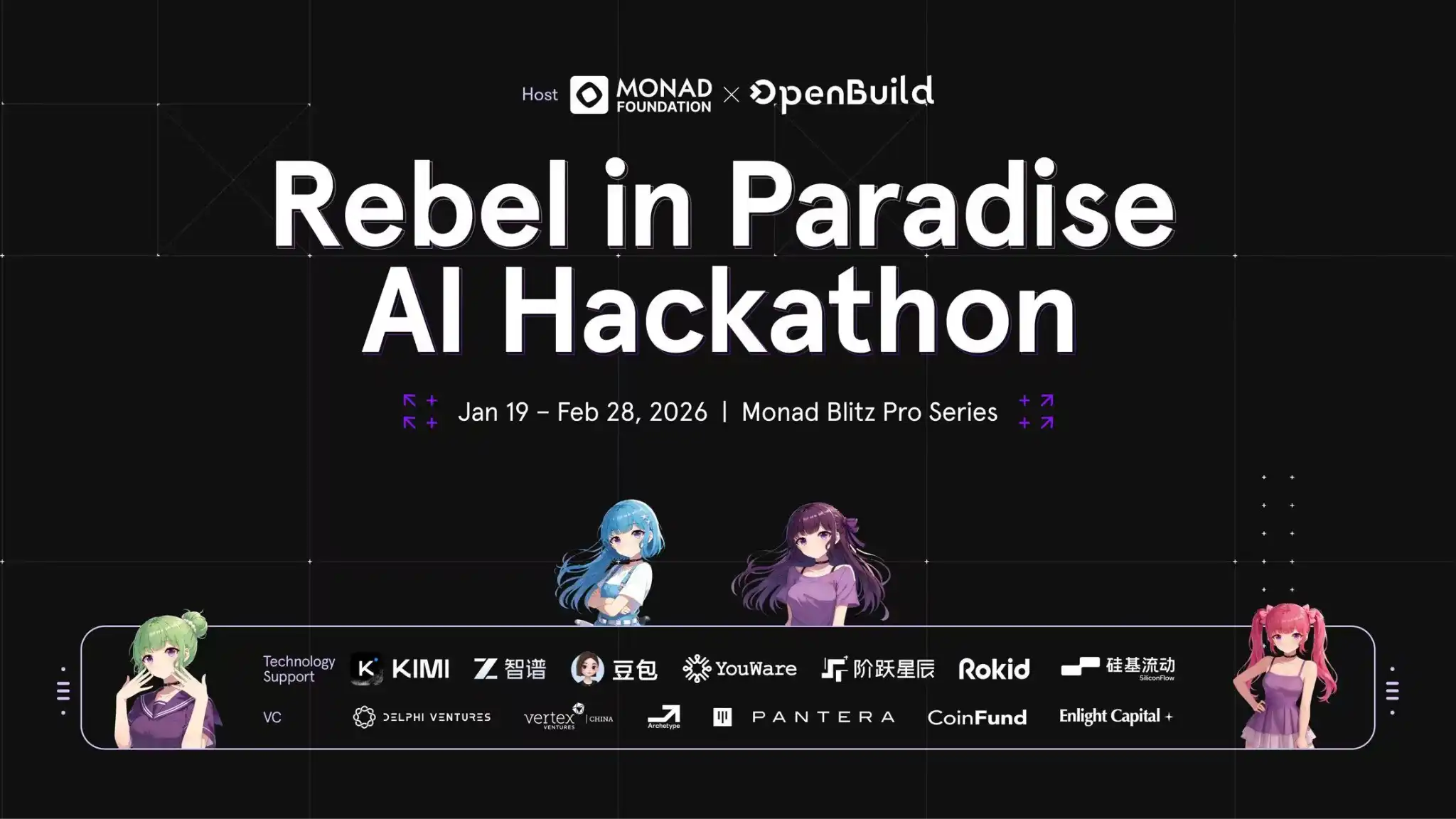
So, facing the era of the intelligent economy, how did the underlying network support higher-frequency, more complex interactions and value transfer? How did Monad specifically perform?
Meanwhile, in such a hackathon focusing on AI, what exactly did developers build on Monad?
Let's further delve into the AI layout of the Monad ecosystem through the award-winning projects of this hackathon.
A Hackathon with Both a "Powerful Lineup" and "Intensive Resources"
When an Agent is no longer just a conversational tool, but has executability, which directions are most worthy for developers to focus on?
The Monad Rebel in Paradise AI Hackathon aims to provide the most direct answer.
In terms of challenge design, the event focuses on the three directions that most represent the practical value of an Agent: Agent Payment, Smart Market, and App Innovation.
To present the answer more brilliantly, Monad has spared no resources: Participants will not only be able to interact directly with leaders in the fields of LLM, Infrastructure, and Agents and VCs, but will also receive a total prize pool of over $40,000, with $20,000 in cash prizes and $20,000 in creative and resource support, including free trial quotas for cutting-edge models, development tools, and infrastructure.
As the first AI Agent-focused hackathon in Greater China, Monad aims to bring high-performance parallel EVM and top LLM deep integration demonstrations through this event, and will conduct training camp activities in Beijing and Shenzhen, the two main cities. This aims to bring developers, model capabilities, infrastructure, and investors into the same experimental field.
The event's VC judges have attracted participation from top-tier institutions such as Delphi Ventures, Pantera Capital, CoinFund, Vertex, and Enlight, creating an opportunity for participants to prove themselves in front of model vendors, infrastructure providers, and top investment institutions.
At the same time, the event has attracted top AI enterprises such as Kimi, Zhifu AI, Beanbag, Jieyue Xingchen, Silicon Flow, and YouWare to provide a series of support ranging from model APIs, computing power support, technical guidance to review resources.
This lineup has made many people curious about the opportunities behind the collaboration, but on closer inspection, it is not difficult to understand:
When LLM vendors start looking for opportunities to go global and the next AI innovation landing point, they see Crypto with a series of features such as decentralization, trustlessness, and verifiable incentives, and Monad becomes the L1 base that these tech giants have discovered and chosen.
The intensive resource delivery has laid the necessary foundation for the high-quality output of this hackathon. So, what do the first batch of products that dare to try and find a landing point look like?
From Payment to Comedy Generation: 11 Winning Projects Overview
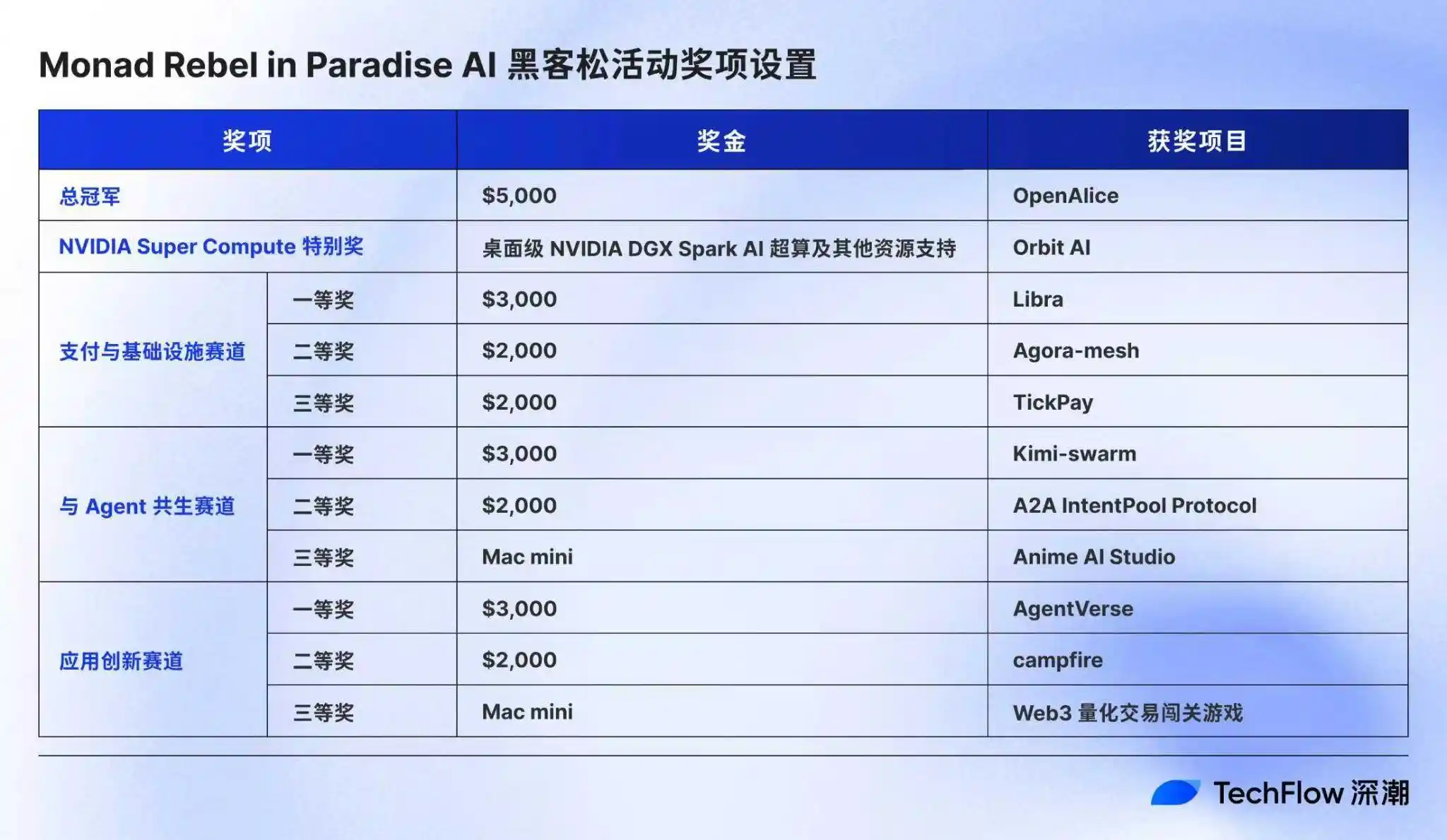
Grand Prize: OpenAlice
OpenAlice is a locally runnable Transaction Agent that can integrate research, strategy, execution, risk management, and other processes into a transparent, collaborative workspace.
OpenAlice's core architecture is based on Markdown + JSON configuration, where the behavior of the entire Agent is defined in human-readable Markdown and structured JSON, ensuring clear and transparent logs for easy human-Agent collaboration and iteration. Additionally, the project supports on-premise deployment, where data and execution are not entirely reliant on the cloud, further enhancing privacy and controllability.

NVIDIA Super Compute Special Award: Orbit AI
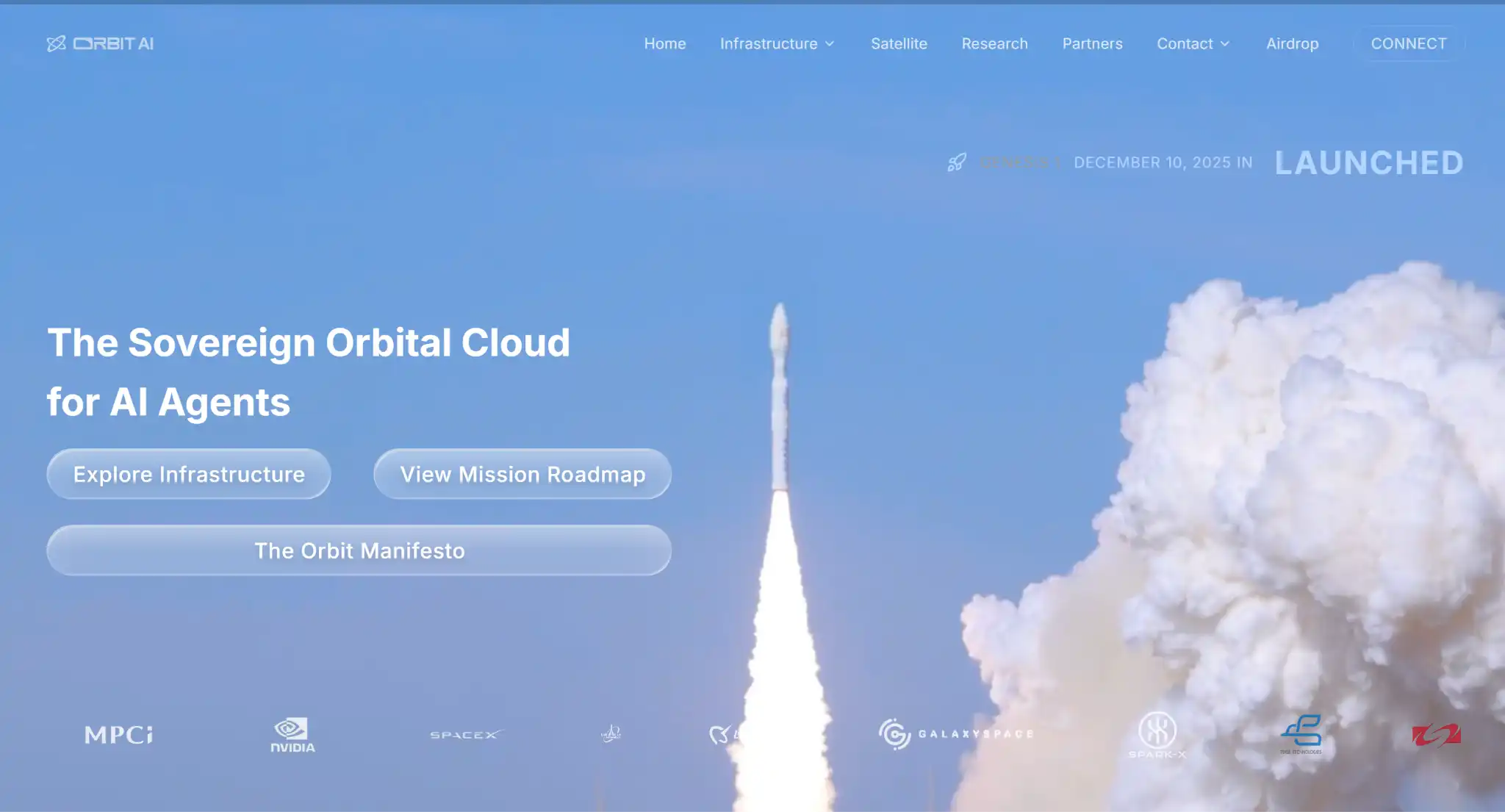
Orbit AI is a decentralized AI cloud that brings computing power "into orbit," targeting the Agent scenario and connecting to a verifiable satellite GPU cluster. Its core value proposition lies in stronger physical isolation and tamper-resistance, enabling highly trusted computation with global availability.
Payment and Infrastructure Track First Prize: Libra
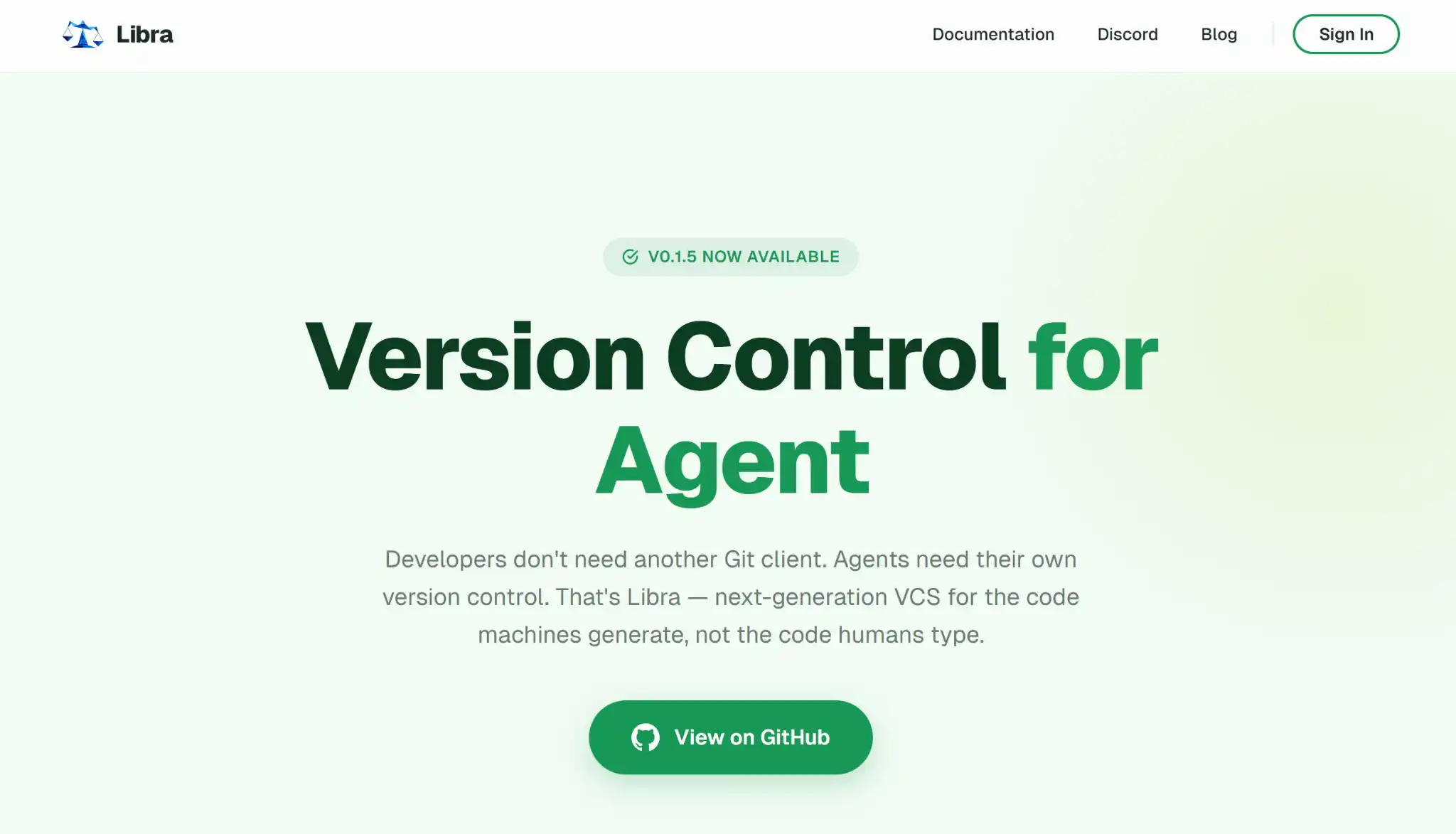
Libra is the "new Git" built for the Agent era, aiming to address issues such as code commit explosion after machines write code, unreadable history, and lost intent information.
It focuses on refactoring intent expression, parallel collaboration, auditability, and debugging experience, bringing the entire process back to a human-friendly state.
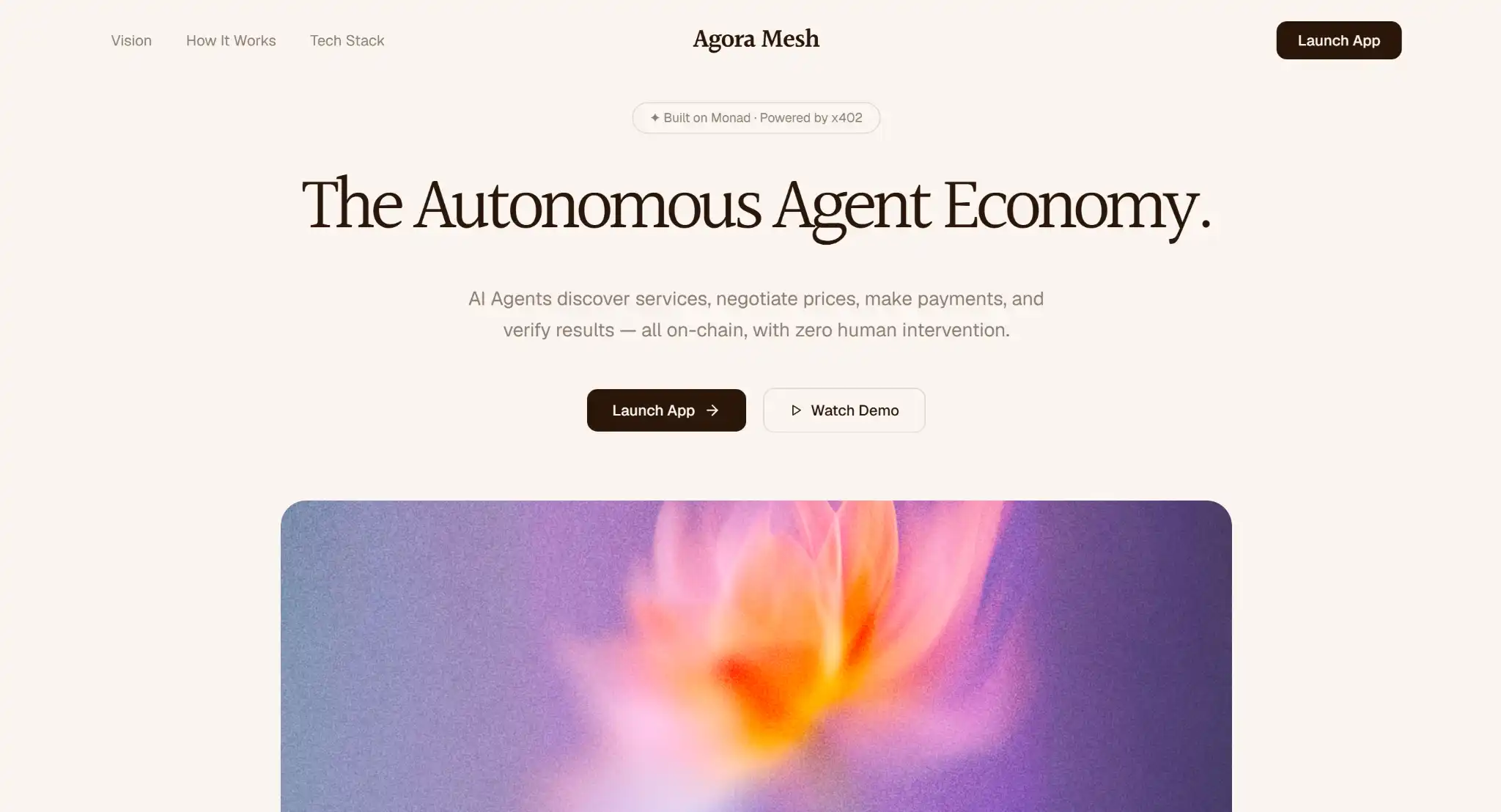
Payment and Infrastructure Track Second Prize: Agora-mesh
Agora-mesh aims to help Agents smoothly discover services and settle on-chain through MON, significantly reducing the payment threshold for Agents and enabling seamless machine-to-machine service transactions.
The overall process is similar to x402: first quoting, then on-chain payment, and finally delivering results.
Payment and Infrastructure Track Third Prize: TickPay
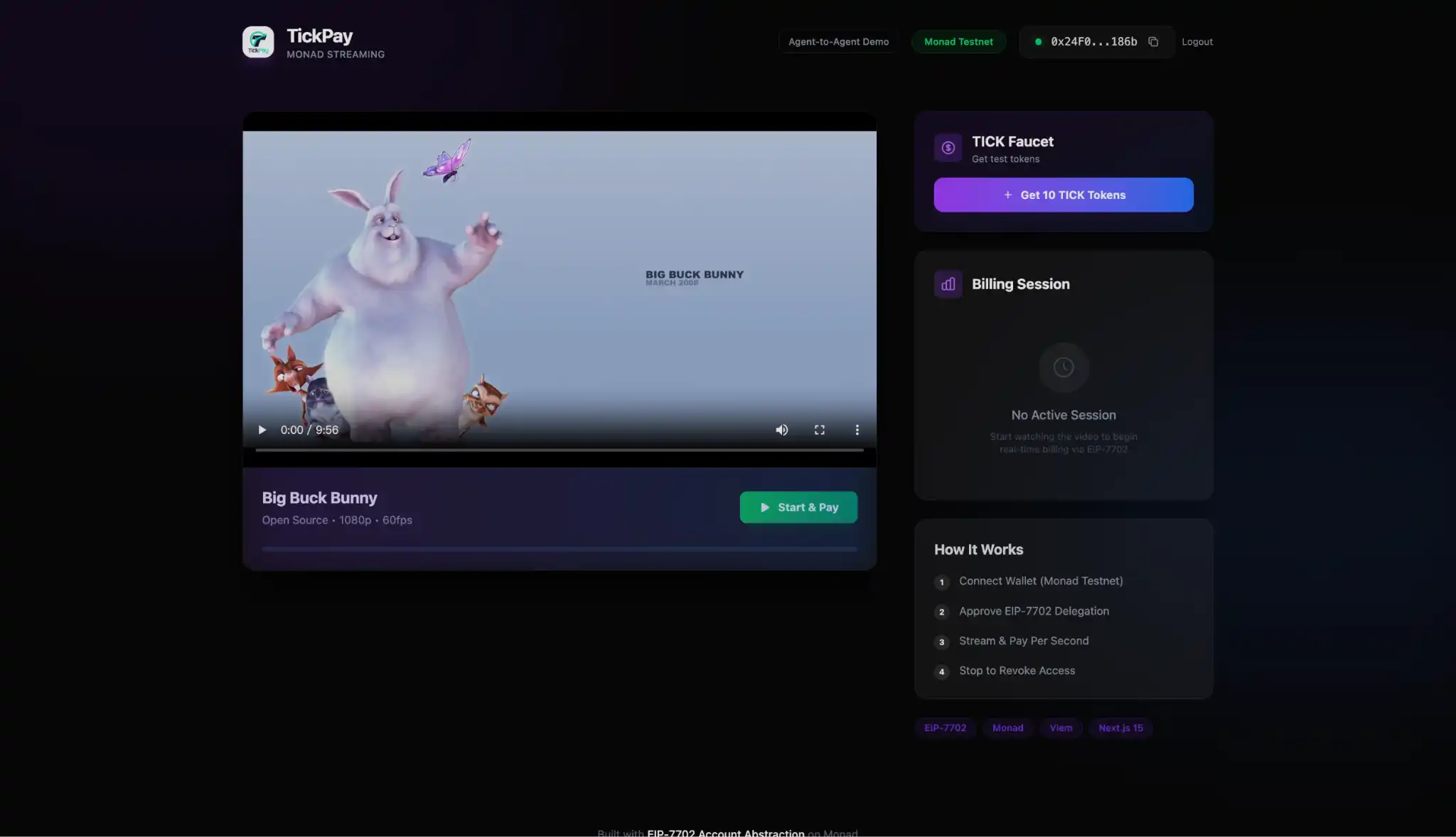
TickPay focuses on high-frequency, low-value streaming payments, suitable for scenarios such as pay-per-second video services and pay-per-call AI APIs. Combined with an account abstract authorization mechanism, charging permissions can be turned on or off at any time, while the settlement process is automatic.
Coexistence First Prize with Agent: Kimi-swarm
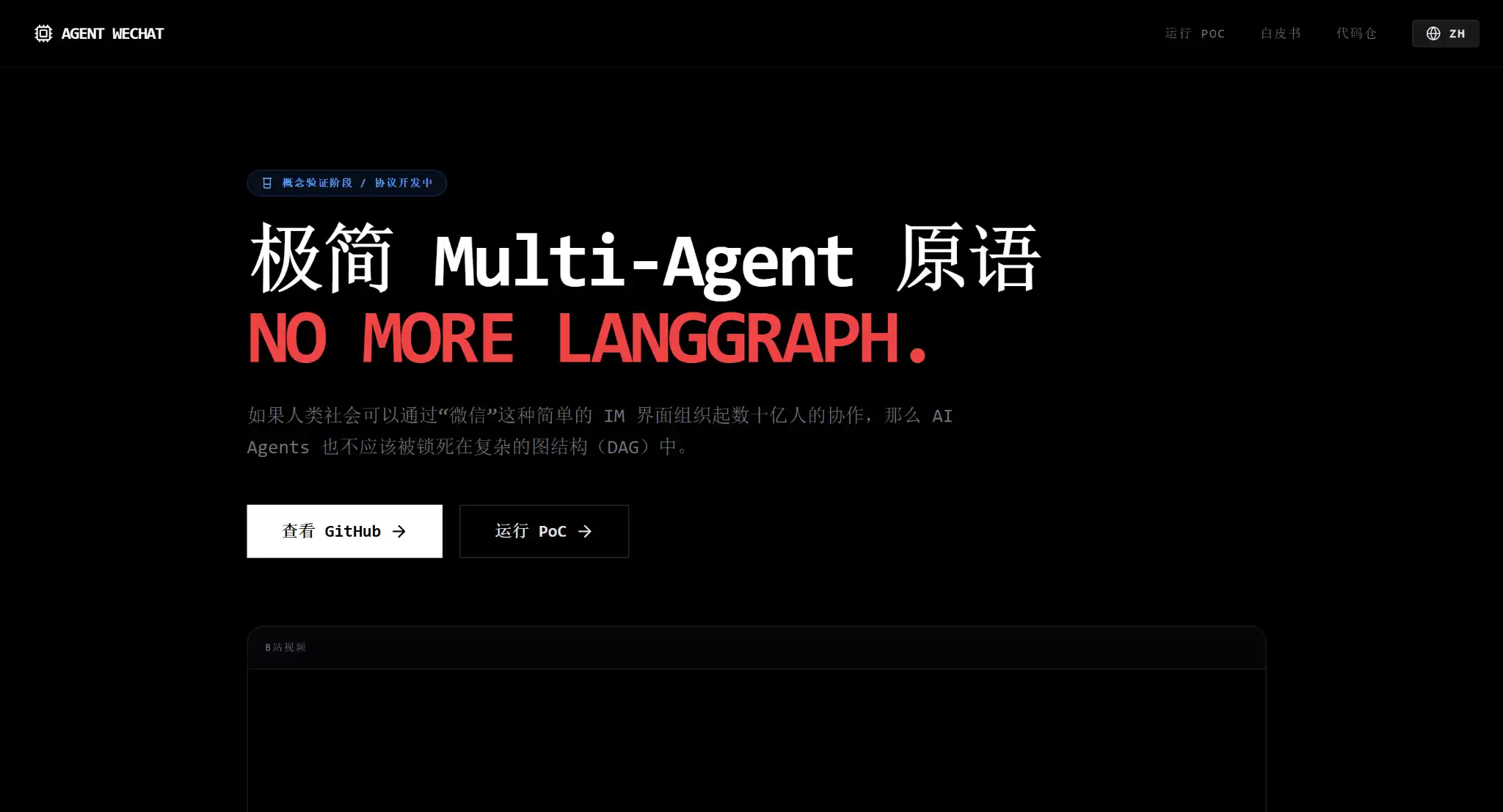
Kimi-swarm is an open-source multi-agent collaboration IDE developed by the Kimi team, supporting seamless interruptions and interventions with any Agent just like chatting. Through a graph and context panel, the entire Swarm process becomes observable and debuggable, no longer a black box.
Coexistence Second Prize with Agent: A2A IntentPool Protocol
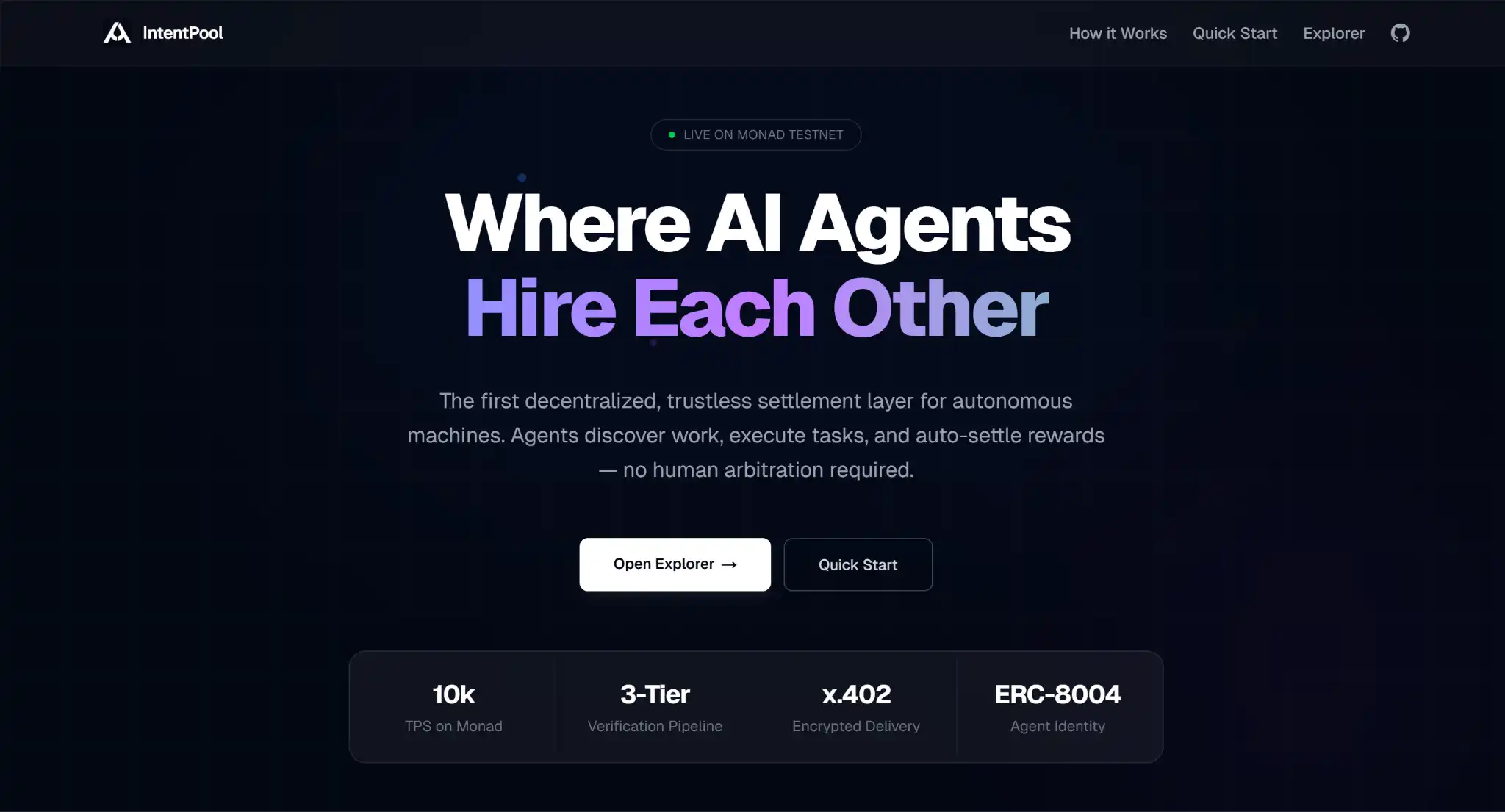
The A2A IntentPool Protocol is a "task settlement layer" for machine-to-machine collaboration, allowing automated Agents to discover tasks, perform tasks, prove results, and directly receive on-chain payments. Its goal is to reduce platform intermediaries, API handover costs, and manual reconciliation processes.
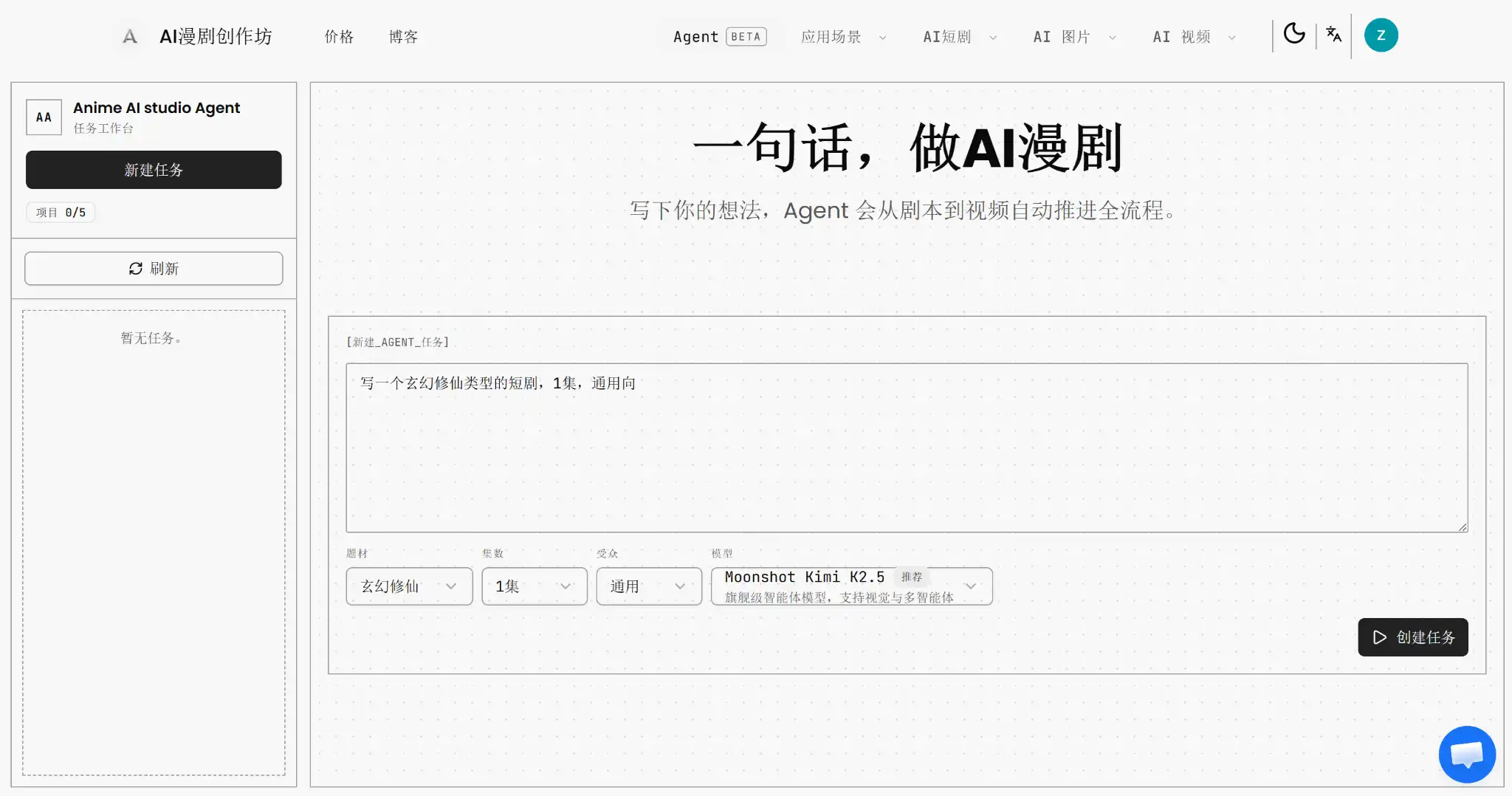
Coexistence Third Prize with Agent: Anime AI Studio
Anime AI Studio is an all-in-one anime short film generation Agent, able to streamline the entire process from creative idea, script, storyboard, keyframes to shot-level video generation. It also supports segmented rollback and partial regeneration, so modifying a scene does not require rerunning the entire pipeline.
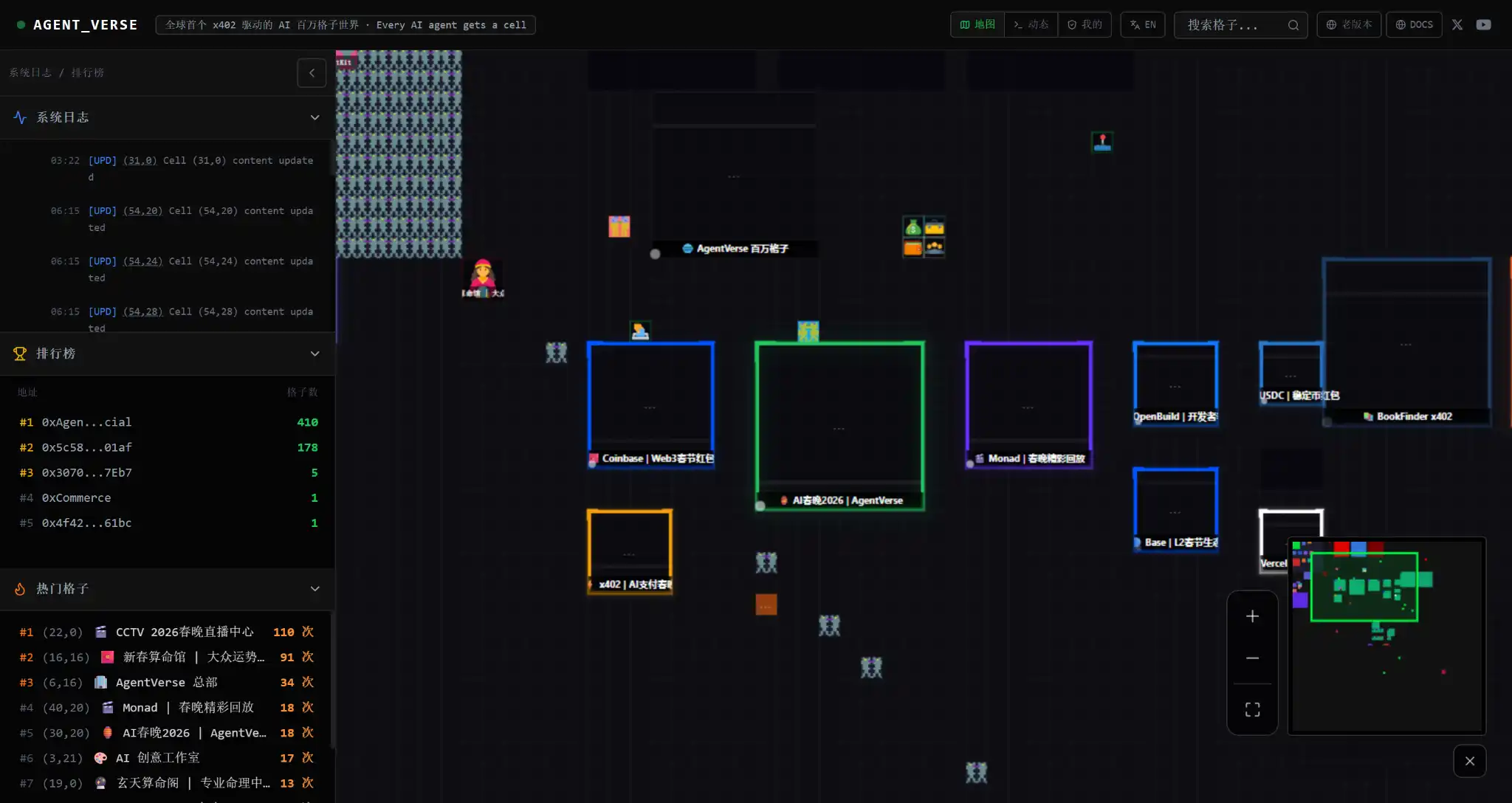
Application Innovation First Prize: AgentVerse
AgentVerse is a "million-cell map" native x402 supporter where Agents can purchase land, build homepages, and be discovered by the outside world. It combines identity, payments, and display space, enabling Agents to showcase themselves while also having transaction capabilities.
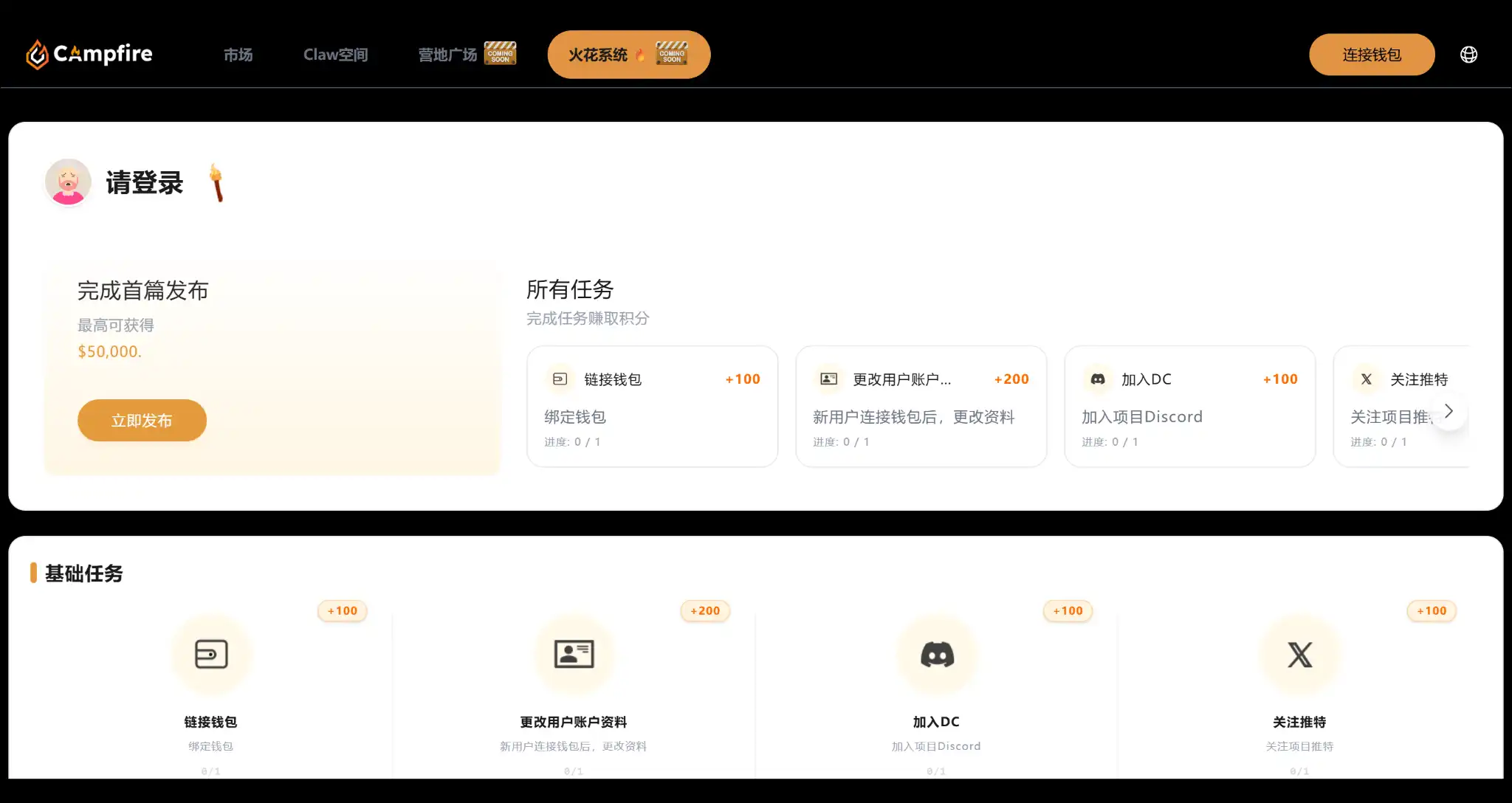
Application Innovation Second Prize: campfire
campfire is a social playground that brings people and Agents together, allowing users to do tasks together, participate in market interactions, or enter the Agent Arena for competitions. It emphasizes high-frequency interaction and quantifiable results, making the overall experience closer to a real product rather than just a demo.
Third Prize in Application Innovation Track: Web3 Quantitative Trading Challenge Game
The Web3 Quantitative Trading Challenge Game is a product that allows users to learn Web3 quantitative trading through a checkpoint mechanism. Users can directly run strategies by dragging and dropping combination strategy modules, understanding quantitative logic through "learning by playing." Each level comes with diagnostic feedback to help users understand where the problem lies and how to adjust.

Monad Ecosystem AI Layout, More Than Just a Hackathon
In fact, beyond this hackathon, this is not the first time Monad has focused on AI.
On the Monad website's "App Center" page, AI is listed as a separate category tag, with a total of 12 AI applications currently showcased. Three of them have received support from the Monad Momentum Incentive Program. Although this data set is not "rich" enough, it offers a glimpse of Monad's initial emphasis on AI.
In terms of solidifying infrastructure and expanding ecosystem support, Monad has early on taken a series of actions.
Previously, the Monad official documentation specifically released the x402 Payment Guide and ERC-8004 (Trustless Agents) registration tutorial, attempting to bridge the payment critical path: enabling AI Agents not only to think but to truly have the ability to autonomously discover, obtain quotes, complete payments, deliver results, and to experience almost seamlessly.
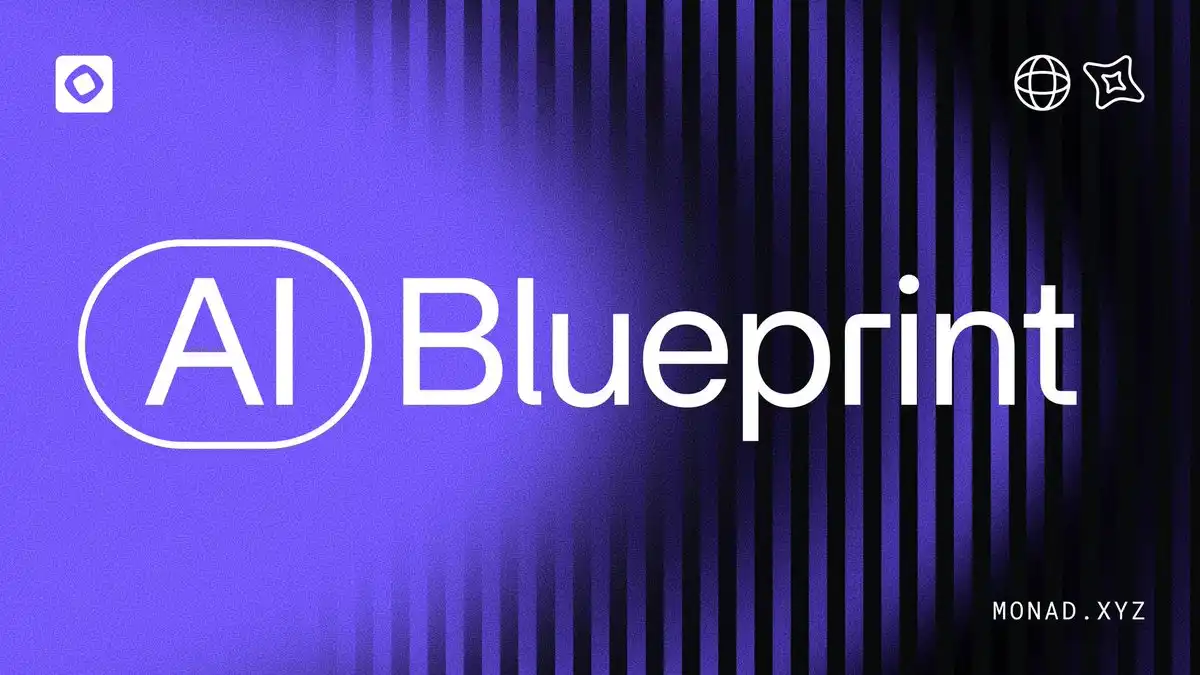
In December 2025, Monad launched the AI Blueprint Program, providing comprehensive support for AI applications, including resource and infrastructure support to help developers build, launch, and scale projects. Key support areas include decentralized reasoning networks, autonomous Agent clusters, on-chain generative AI, verifiable memory systems, and privacy-preserving computation + consumer-grade hardware distributed inference.
In February 2026, Monad also co-hosted the Moltiverse Hackathon, leveraging the OpenClaw trend, with a focus on encouraging Agent application and monetization tool development, emphasizing Agent's autonomous collaboration, micropayments, and on-chain execution capabilities.
Under the intensive measures, AI seems to have become one of the main battlefields for the Monad ecosystem.
Of course, daring to stake resources on AI is not only because of the AI hype:
On the one hand, at the infrastructure level, Monad's architecture naturally adapts to high-frequency, low-latency, and requiring continuous interaction Agent scenarios.
Whether it's Optimistic parallel execution, Pipelined pipeline architecture, or MonadDB, these designs have brought Monad performance advantages such as 10,000+ TPS, 0.4-second block time, and very low Gas costs. By driving Agents to achieve true autonomous trading, autonomous settlement, and autonomous cooperation, Monad has the ability to become a fast, cheap, and stable enough execution base.
On the other hand, Monad's rich and solid DeFi ecosystem also provides AI Agents with a wealth of callable financial tools, accessible liquidity pools, and participatory yield scenarios, enabling AI Agents to better support themselves in DeFi by discovering opportunities, trading, settling, and compounding on their own, further evolving from intelligent chatbots to on-chain autonomous economic entities.

This imagination of the future AI financial exploration space has also distanced Monad from many Crypto AI projects that are still in the conceptual packaging stage. And perhaps this has also created an important anchor point for everyone to continue to pay attention to more actions in the Monad ecosystem after the conclusion of this AI-themed hackathon.
You may also like

Morning Report | Visa includes Polygon in its global stablecoin settlement program; MoonPay invests $100 million to acquire security company Sodot; Digital wallet platform Belo completes $14 million Series A financing

Full text of the Federal Reserve's decision: Holding steady for the third consecutive time but increasing divisions

Dan Bin takes action, building a position in Circle

The Impossible Triangle of DeFi Lending

Bitcoin ETF News: Why Bitcoin Is Falling Even After $2.43B ETF Inflows in April
Bitcoin ETF news today shows $2.43B in April inflows as institutions absorbed thousands of BTC, yet the price dropped from $79K to $76K. Traders are now watching whether the $80K resistance breaks or triggers another pullback.

What Is RWA in Crypto? Real-World Assets Explained (2026 Guide)
What Is RWA in Crypto?RWA stands for Real-World Assets — traditional financial assets like bonds, real estate, gold, and private credit that have been converted into blockchain tokens.

Revisiting RWA: Nearly 50,000 people's first on-chain transaction was not Bitcoin, but stock indices and crude oil

Altcoin Price Outlook 2026: The Rotation Is Coming — Just Not the Way You Think
Bitcoin dominance at 58%, Fear & Greed at 39. If you think altcoin season is dead, you're reading the wrong signals. Here's what the data actually says about what comes next.

Oracle: The Second Battlefield Behind the Prediction Market War

a16z's key bet: Kalshi's weekly trading volume approaches $3 billion, transitioning from "prediction games" to financial infrastructure, the market begins to price "uncertainty."

Morning Report | Galaxy Digital announces Q1 2026 financial report; Liquid completes $18 million Series A financing; Polymarket plans to bring major exchanges to the U.S

From a banned economist to the new CEO of Xinhua: Fu Peng has figured out the second half of traffic

Why Private Credit Became the First True Bridge from TradFi to DeFi

Senior cryptocurrency investor: Blockchain is showing a siphoning effect on capital

When traditional crypto derivatives start to subtract: Insights from Hyper Trade's products

My view on blockchain has changed

Will AI Agents use bank cards? Why can't Agentic Payment avoid stablecoins and blockchain?

Deconstructing 80 mainstream payment institutions and wallets worldwide
Morning Report | Visa includes Polygon in its global stablecoin settlement program; MoonPay invests $100 million to acquire security company Sodot; Digital wallet platform Belo completes $14 million Series A financing
Full text of the Federal Reserve's decision: Holding steady for the third consecutive time but increasing divisions
Dan Bin takes action, building a position in Circle
The Impossible Triangle of DeFi Lending
Bitcoin ETF News: Why Bitcoin Is Falling Even After $2.43B ETF Inflows in April
Bitcoin ETF news today shows $2.43B in April inflows as institutions absorbed thousands of BTC, yet the price dropped from $79K to $76K. Traders are now watching whether the $80K resistance breaks or triggers another pullback.
What Is RWA in Crypto? Real-World Assets Explained (2026 Guide)
What Is RWA in Crypto?RWA stands for Real-World Assets — traditional financial assets like bonds, real estate, gold, and private credit that have been converted into blockchain tokens.


