

Fast as lightning is not enough, what is the EVM chain really pushing for?

Original Title: Battle of the EVM Chains: Who's Winning the Giga Gas War?
Original Author: yusufxzy, Delphi_Digital Researcher
Original Translation: Dynamic Duo Deep
Editor's Note: The current focus of EVM-compatible chains (such as Sonic, MegaETH, Monad, Sei, Fuel) has shifted from decentralization and security to raw performance and ecosystem strategy. Each chain is competing in the market through differentiated paths (such as developer incentives, extreme speed, ecosystem pre-building, technical optimization, or Layer 2 innovation), but the ultimate winner must establish an advantage across comprehensive dimensions such as speed, user experience, economic model, and ecosystem maturity, rather than relying solely on throughput.
The following is the original content (rearranged for easier reading comprehension):
The blockchain space has entered a new dimension of competition. The early battle between L1 and L2 focused on decentralization, composability, and security. Now the battlefield has shifted to the raw performance track. Multiple EVM-compatible chains including Sonic, MegaETH, Fuel, Monad, and Sei are competing to break through the once-considered impossible scalability peak. But is raw performance the deciding factor? This article analyzes the strategic differences of these chains.
Sonic: Linking Developer Rewards to Ecosystem Contribution
@SonicLabs (formerly Fantom) has completed a strategic transformation, and its core innovation, the "FeeM" mechanism, allocates 90% of transaction fees generated by applications to developers, with validators receiving only 10%.
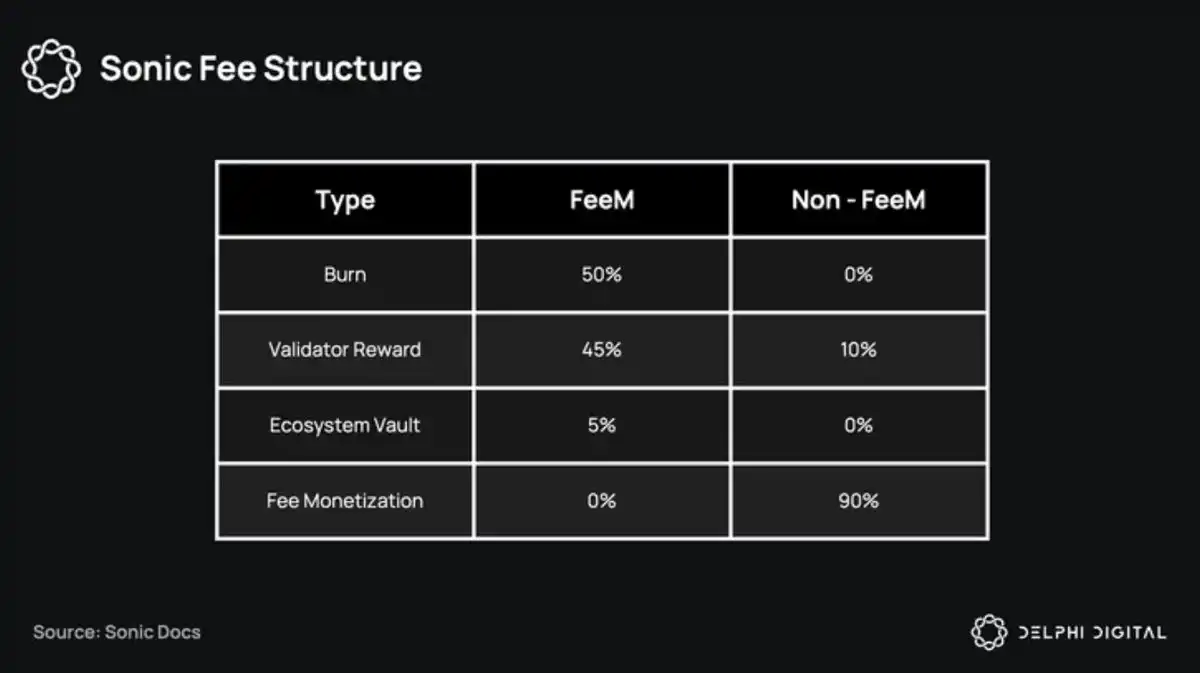
This model has proven effective—ecosystem DEX project @ShadowOnSonic
has quickly risen to the Top 4 in weekly revenue rankings. Meanwhile, Sonic's dual incentives through DeFi app interactions and token airdrops have driven TVL to a historical high of $9.62 billion.
Competitive Advantage:
• Direct economic incentives linking to developer loyalty
• High-yield-driven application ecosystem stickiness
• Early adoption to validate the effectiveness of the metric verification model
Potential Challenge:
• Decentralization is still at a nascent stage (currently around 35-40 validator nodes)
• Continued development momentum is needed to eliminate the impact of Fantom's brand history
MegaETH: The Balancing Act of Ultimate Speed and User Experience
The @megaeth_labs testnet set a performance record of one gigagas per second with a 0.1 millisecond block time, leveraging its L2 architecture to achieve this breakthrough by abandoning the consensus mechanism.
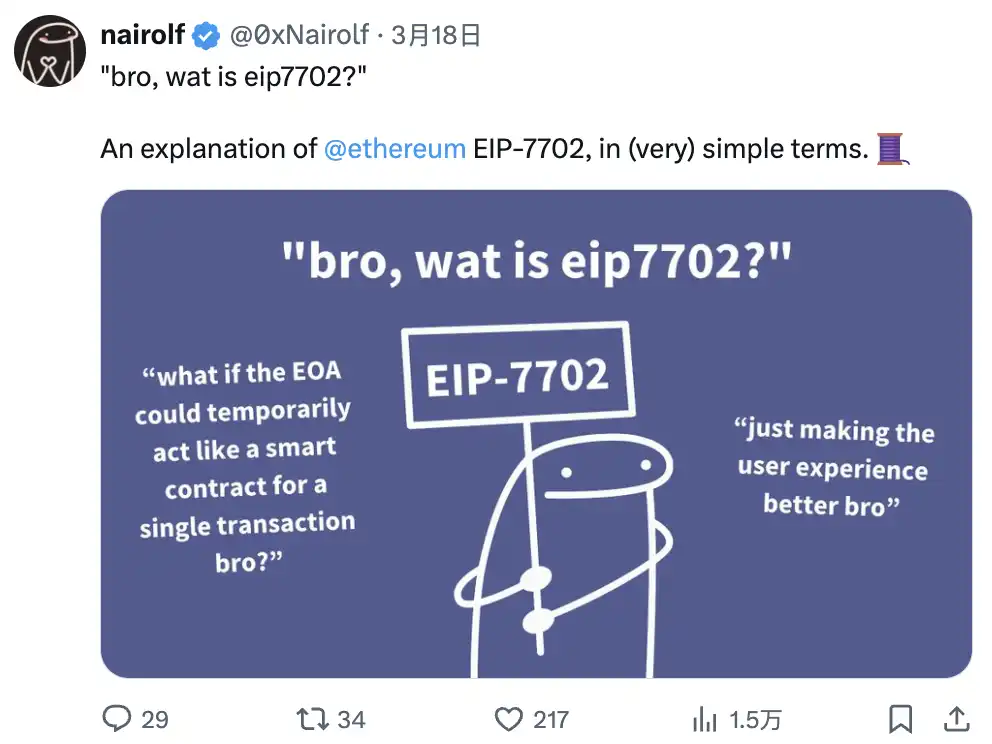
But the chain's ambition goes beyond data: it is the first to experimentally support EIP-7702, addressing a historical pain point since 2020 where users have lost over $300 million due to approval operations through innovations such as transaction batching and Gas abstraction.
In terms of community building, MegaETH, with a valuation of $2 million, completed a public sale in 10 minutes, raising $10 million, followed by an NFT fundraising round reaching a $6 million valuation, starkly in contrast to VC financing.
Competitive Advantages:
• Industry-leading testnet performance metrics
• First-mover advantage in UX innovation (EIP-7702)
• Community consensus achieved through fair token distribution
Potential Challenges:
• Dependency on the EigenDA data availability layer
• Aggressive performance targets awaiting real-world validation
Monad: Building an Ecosystem Before Going Live
Although the @monad_xyz mainnet has not yet launched, it has already built a complete infrastructure matrix: on the first day, it integrated with the Phantom wallet, attracted top DeFi protocols like Uniswap/Balancer, and integrated cross-chain solutions like LayerZero.
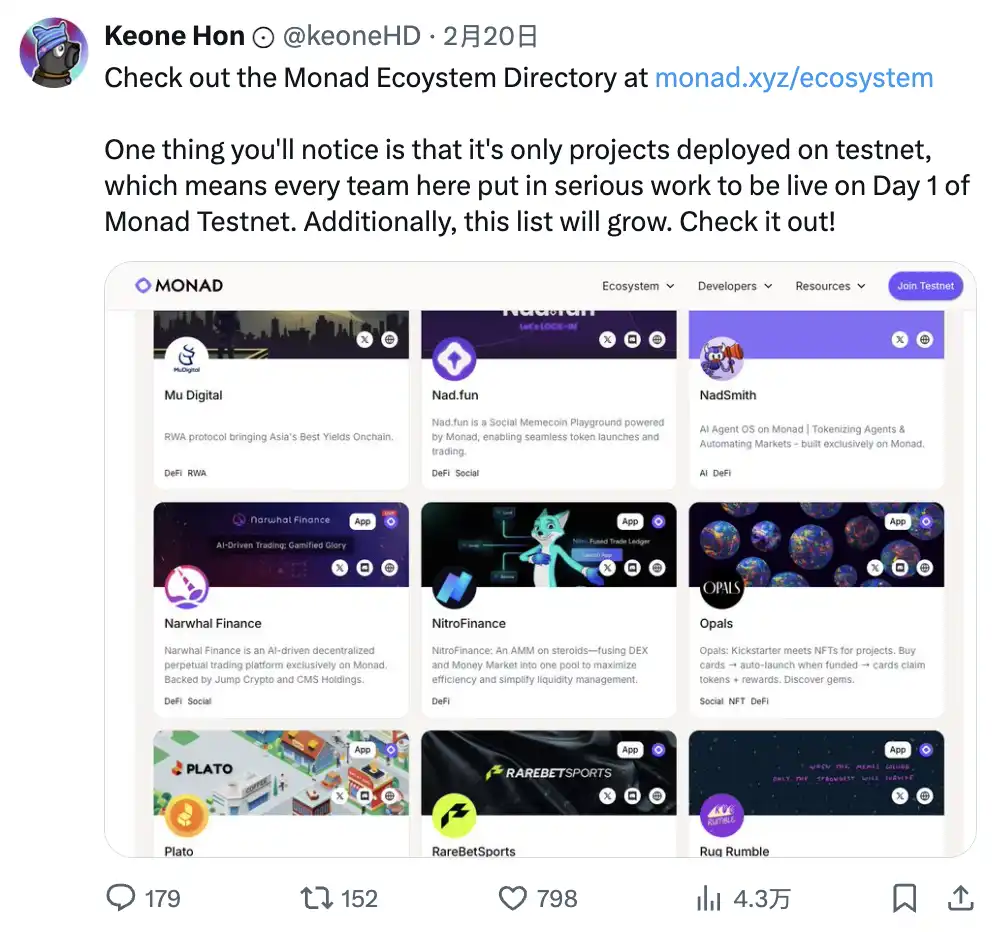
This "plug-and-play" strategy can be seen as a force multiplier in today's crowded blockchain space.
Competitive Advantages:
• Ready-to-use ecosystem infrastructure
• Launch-ready with high liquidity channels
Key Challenge:
• Need to transform early momentum into sustained growth
Sei: The Disruptive Challenge of Tech Prodigies
@SeiNetwork has achieved an internal scalability breakthrough through deep optimization of the consensus and storage layers, along with injecting funding into early developers. However, the current ecosystem still lacks flagship applications, struggles with user adoption and faces competition gaps, as its technical advantages have yet to translate into market influence.
Competitive Advantage:
• Proven scalability technology architecture
• Specialized grant programs for builders
Key Challenge:
• Low actual adoption rates
• Urgent need to create a phenomenon-level application
Fuel: Breaking Free from Ethereum's DA Shackles
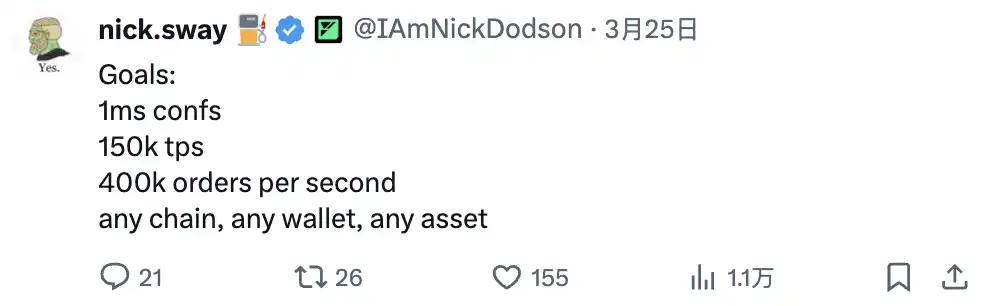
@fuel_network's upcoming "Redacted" L2 adopts an alternative DA solution, aiming to achieve a throughput of 150,000 TPS, marking a strategic shift from Ethereum compatibility to performance prioritization. Its vision of 1-millisecond confirmations and 400,000 orders per second will redefine the performance benchmark for public chains.
Endgame Perspective: The Value War Beyond Throughput
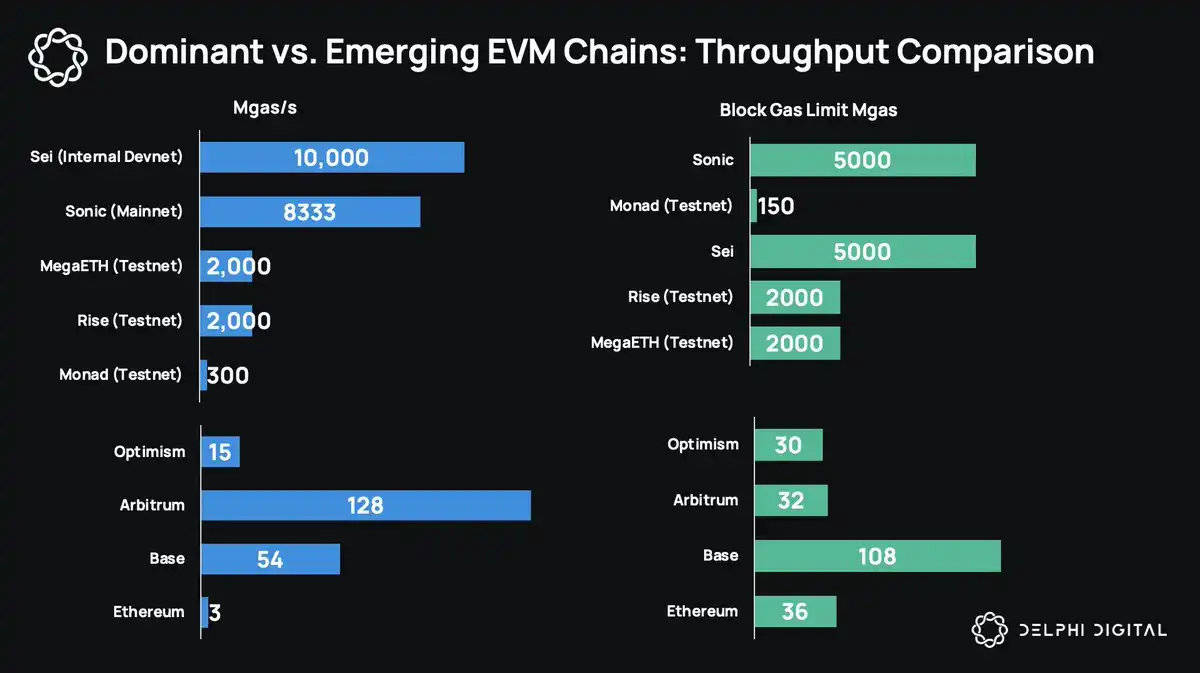
While the market value of these tokens is still to be observed, the current L1 and L2 race has become saturated. With intense competition among chains in terms of liquidity, applications, developers, and users, valuations may show a downward trend.
As gas in the gigabyte range becomes the norm, the real winners will be those that can offer a higher value public chain, including speed advantages, incentive mechanisms, user experience, ecosystem completeness, and security guarantees among other comprehensive strengths. The gigabyte gas war is intensifying, but the ultimate key to victory is by no means limited to raw throughput.
You may also like

Revisiting RWA: Nearly 50,000 people's first on-chain transaction was not Bitcoin, but stock indices and crude oil

Altcoin Price Outlook 2026: The Rotation Is Coming — Just Not the Way You Think
Bitcoin dominance at 58%, Fear & Greed at 39. If you think altcoin season is dead, you're reading the wrong signals. Here's what the data actually says about what comes next.

Oracle: The Second Battlefield Behind the Prediction Market War

a16z's key bet: Kalshi's weekly trading volume approaches $3 billion, transitioning from "prediction games" to financial infrastructure, the market begins to price "uncertainty."

Morning Report | Galaxy Digital announces Q1 2026 financial report; Liquid completes $18 million Series A financing; Polymarket plans to bring major exchanges to the U.S

From a banned economist to the new CEO of Xinhua: Fu Peng has figured out the second half of traffic

Why Private Credit Became the First True Bridge from TradFi to DeFi

Senior cryptocurrency investor: Blockchain is showing a siphoning effect on capital

When traditional crypto derivatives start to subtract: Insights from Hyper Trade's products

My view on blockchain has changed

Will AI Agents use bank cards? Why can't Agentic Payment avoid stablecoins and blockchain?

Deconstructing 80 mainstream payment institutions and wallets worldwide
The MiCA Fast Track for Cryptocurrency Licenses: Why OKX and BVNK Choose Malta
a16z Crypto: Stablecoins are rebuilding the global financial infrastructure

ENI's RWA ambition: to create an enterprise-level BaaS platform that allows Web2 institutions to "go beyond just asset on-chain."

Morning Report | a16z releases global financial new stack report; Websea's withdrawal channel suspected of running away; Strategy purchased 3,273 bitcoins last week

The most Crypto group of people is becoming the least Crypto

MSTR STRC In-depth Study: The BTC Financing Flywheel Behind the 11.5% Yield
Revisiting RWA: Nearly 50,000 people's first on-chain transaction was not Bitcoin, but stock indices and crude oil
Altcoin Price Outlook 2026: The Rotation Is Coming — Just Not the Way You Think
Bitcoin dominance at 58%, Fear & Greed at 39. If you think altcoin season is dead, you're reading the wrong signals. Here's what the data actually says about what comes next.
Oracle: The Second Battlefield Behind the Prediction Market War
a16z's key bet: Kalshi's weekly trading volume approaches $3 billion, transitioning from "prediction games" to financial infrastructure, the market begins to price "uncertainty."
Morning Report | Galaxy Digital announces Q1 2026 financial report; Liquid completes $18 million Series A financing; Polymarket plans to bring major exchanges to the U.S
From a banned economist to the new CEO of Xinhua: Fu Peng has figured out the second half of traffic


